

 Floating Candles
 Tealight Candles
 Taper / Dinner Candles


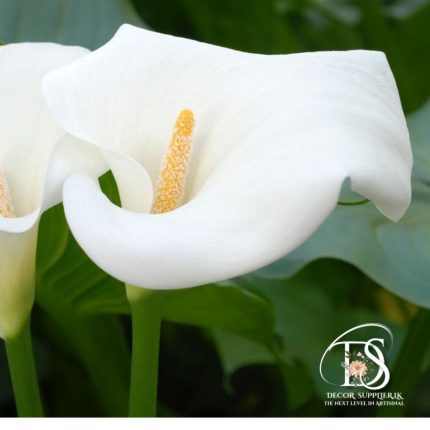
The Arum lily (Zantedeschia aethiopica) is a perennial herb native to South Africa, known for its large, arrow-shaped, glossy dark green leaves and large, white, funnel-shaped flowers with a central yellow spike. It thrives in damp, wet environments like wetlands and pond margins but is considered a invasive weed in many parts of the world, forming dense stands that can displace native plants. All parts of the arum lily are toxic if ingested, causing severe irritation and swelling in the mouth and throat due to calcium oxalate
- Appearance: A robust, clump-forming plant with large, leathery, dark green, arrow-shaped leaves.
- Flowers: A large, white, funnel-shaped bract surrounds a central yellow or orange spike (spadix).
- Growth Habit: Grows from underground rhizomes and can reach up to 1.5 meters in height.
Habitat and Ecology
- Native Range: Southern Africa, particularly in marshy areas.
- Preferred Conditions: Prefers damp, wet habitats, such as wetlands, riparian areas, and damp borders.
- Environmental Impact: In regions where it has naturalized, it forms dense infestations, impacting wetlands and pastures.
Toxicity and Harm
- Poisonous Parts: All parts of the plant, including leaves, flowers, roots, and seeds, are toxic.
- Symptoms of Ingestion: Chewing or ingesting the plant can cause swelling and burning in the mouth and throat, stomach pain, vomiting, and severe diarrhea.
Cultivation and Use
- Ornamental Value: Popular as a garden plant for its striking foliage and attractive flowers, which are also used in the cut flower industry.
- Growing Conditions: Requires moist compost and can be grown in pots, bog gardens, or along pond margins.
Weed Status and Control
- Invasive Potential: Considered a significant environmental weed in countries like Australia and New Zealand.
- Dispersal: Spread by seeds, livestock, birds, and human activity (e.g., dumping garden waste).


Reviews
There are no reviews yet.